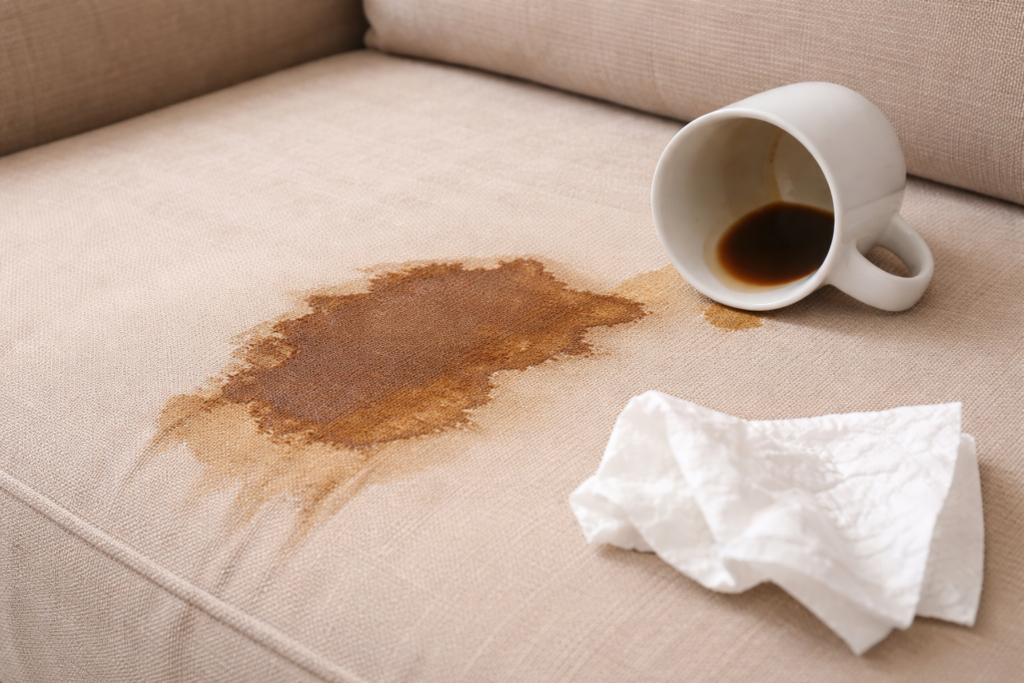
Coffee stains on a couch are frustrating because upholstery holds onto pigments and oils, and the wrong cleaning method can spread the stain or leave a visible ring. Many people make the problem worse by scrubbing aggressively, using too much water, or grabbing a harsh household cleaner without checking the fabric first. The safest approach is to identify your couch material, start with a gentle method, and only escalate if the stain is set in. In this guide, you’ll learn how to safely remove coffee stains from couch step by step, including fabric and microfiber-specific methods, what not to do, and how to dry the area properly so you don’t end up with odors or water marks.
How to Remove Coffee Stains from Couch Effectively
Identify the Material First (Don’t Skip This)
Before you do anything, take 30 seconds to confirm what you’re cleaning. Coffee stain removal depends heavily on whether the fibers can tolerate water, rubbing, and certain cleaners.
Quick checklist to identify the material
- Check the tag under the cushions or on the underside of the couch:
- W = water-based cleaner is generally safe
- S = solvent-based only (avoid water)
- WS = water or solvent-based
- X = vacuum only; professional cleaning recommended
- Look at the texture: microfiber feels very fine and uniform; woven fabric shows visible threads.
- Do a touch test: if the surface seems sensitive, plush, or changes shade when brushed, treat it gently.
If you’re unsure, test any method on a hidden area first (behind a cushion or along the back edge).
What NOT to Do (Common Mistakes)
Avoid these common mistakes—they’re the main reason coffee stains turn into permanent-looking marks:
- Scrubbing hard: pushes coffee deeper and damages fibers.
- Using hot water: can set pigments and spread the stain.
- Over-wetting the cushion: can cause water rings, mildew, or odors.
- Using bleach or strong degreasers: can discolor fabric instantly.
- Spraying cleaner directly onto the stain: increases saturation and ring risk.
- Skipping a spot test: different dyes and fabrics react differently.
- Letting the area stay damp: invites musty smells and visible marks.
Tools & Supplies You’ll Need
You can remove most coffee stains with simple supplies:
Basic (recommended)
- Clean white microfiber cloths or paper towels (for blotting)
- Mild dish soap
- Distilled water (helps reduce water rings)
- A small bowl or spray bottle (optional)
Helpful (optional)
- Upholstery-safe stain remover (for set-in stains)
- Enzyme cleaner (if coffee + milk/sugar caused lingering odor)
- Wet/dry vacuum or upholstery extractor (for deep rinsing)
- Fan (for faster drying)
If you don’t have distilled water: use the cleanest filtered water you can and keep moisture minimal.
Step-by-Step Method (Safest First)
Use this method first for fresh or recent coffee stains on most fabric and many WS upholstery types.
- Blot immediately (don’t rub).
Press a dry cloth into the stain to lift as much liquid as possible. Switch to a clean section of cloth as it absorbs coffee. - Mix a gentle cleaning solution.
Combine 1 cup distilled water with ½ teaspoon mild dish soap. You want suds, not a strong mixture. - Dampen the cloth—do not soak the couch.
Lightly dampen a cloth with the solution and blot the stain from the outside toward the center. - Repeat blotting in short rounds.
Work in 20–30 second rounds, then pause. This prevents over-wetting and reduces ring risk. - “Rinse” with minimal moisture.
Dampen a new cloth with plain distilled water and blot the cleaned area to remove soap residue. - Dry thoroughly.
Press a dry towel into the area to lift moisture, then aim a fan at the couch for faster drying.
Spot test note: If the fabric color transfers to your cloth during step 3, stop and use a more conservative method or consult a pro.
If the Stain/Odor Is Set In (Deeper Method)
If the coffee stain is older, dark, or has sugar/milk residue, you may need a deeper approach.
- Start with the gentle method above.
If it lightens but doesn’t fully lift, continue. - Use an upholstery-safe stain remover (spot tested).
Apply product to a cloth first, not directly onto the couch. Blot, don’t scrub. - Use an enzyme cleaner for stubborn residue or odor (optional).
Coffee with dairy/sugar can leave organic residue. Enzyme cleaners can help, but always spot test and follow label instructions. - Rinse carefully.
Any product residue can attract dirt later. Use a barely damp cloth with distilled water to blot out remaining cleaner. - Stop before you over-wet.
If you’ve done multiple rounds and the cushion feels damp, pause and dry fully before trying again.
Material-Specific Instructions (Most Important)
Fabric Upholstery
Do:
- Blot gently and use minimal moisture.
- Use distilled water to reduce rings.
- Rinse lightly to remove soap residue.
Don’t:
- Scrub with a brush unless the fabric is very durable.
- Saturate the cushion.
Drying tip: Press dry towels firmly, then use a fan for several hours.
Microfiber Couches
Microfiber can show marks if you use too much water or the wrong technique.
Do:
- Use a lightly damp cloth, not a wet one.
- Blot, then brush the fibers gently after drying (a soft brush works well).
Don’t:
- Leave uneven damp patches; that can create darker “water shadow” areas.
- Use oily cleaners that can leave a residue.
Drying tip: Once dry, lightly brush in one direction to restore the uniform look.
Leather (If Coffee Spilled on Leather Sections)
Coffee on leather should be treated quickly, but gently.
Do:
- Blot immediately with a dry cloth.
- Use a slightly damp cloth with plain water first.
- If needed, use a leather-safe cleaner (spot tested) and finish with a conditioner.
Don’t:
- Use vinegar, baking soda paste, or harsh detergents on leather.
- Over-wet leather—moisture can cause stiffness or discoloration.
Drying tip: Wipe dry and let it air dry away from heat sources.
Suede (If Applicable)
Suede is delicate and can stain easily.
Do:
- Blot carefully with a dry cloth first.
- Use a suede-specific cleaner if the stain remains (spot test).
- Consider professional cleaning if the stain is large.
Don’t:
- Use water-based methods freely; suede often shows marks and texture changes.
Drying tip: Allow to air dry fully, then brush gently with a suede brush.
Can You Use Vinegar or Baking Soda (or Household Cleaners)?
Vinegar: It can help on some fabrics, but it’s risky on certain dyes and materials. If you try it, use a mild dilution (for example, a small amount mixed with water), apply to a cloth (not directly), and spot test first. If the color changes or transfers, stop.
Baking soda: Baking soda is better for odors than for lifting dark coffee pigments. On some upholstery it can leave a dusty residue that’s hard to fully remove. If you use it for odor control, apply lightly, let it sit briefly, then vacuum thoroughly—avoid making a wet paste unless you know the material tolerates it.
Household cleaners: Avoid multipurpose sprays, bleach, strong degreasers, or anything with “whitening” claims. They’re common causes of discoloration and texture damage.
Safer alternative: Use the mild soap method first, then an upholstery-safe stain remover if needed.
Drying & Finishing (Prevent Odors and Marks)
Drying is where many people go wrong. If you leave the cushion damp, you risk odors and water rings.
- Blot moisture out with a clean towel by pressing firmly (don’t rub).
- Improve airflow: open windows if possible and run a fan aimed at the area.
- Avoid heat (hair dryers or space heaters) on delicate fabrics and leather; it can set marks or cause shrinkage/stiffness.
- Give it time: light cleaning may dry within a few hours; deeper cleaning may take longer depending on cushion thickness and humidity.
If you notice a faint ring after drying, it often means the area dried unevenly. You can lightly even it out by blotting the surrounding area with a barely damp cloth and drying thoroughly again.
Prevention Tips (Make It Less Likely Next Time)
- Use a cup with a lid on couches, especially on fabric or microfiber.
- Clean spills immediately—fresh stains are far easier.
- Keep clean microfiber cloths in an easy-to-reach place.
- Consider an upholstery-safe fabric protector (spot test first).
- Vacuum couches regularly; dirt can bind with spills and worsen staining.
- Rotate cushions so one area isn’t taking all the wear.
- Avoid eating/drinking coffee on light-colored upholstery if possible.
- For pet owners, address odors quickly so they don’t embed into foam.
When to Call a Professional
Call a professional upholstery cleaner if:
- The couch tag says X (vacuum only) or S and you’re not using solvents.
- The stain covers a large area or has soaked into the cushion foam.
- The fabric is delicate (suede, specialty blends, vintage materials).
- The stain keeps coming back after drying (foam contamination).
- There’s a strong odor that doesn’t improve after proper drying.
What to ask a pro:
- Whether they do a fabric test before cleaning
- What method they use (low-moisture vs extraction)
- How they prevent water rings and over-wetting
Conclusion
To remove coffee stains from a couch safely, start by identifying the material and avoiding the biggest mistakes—scrubbing, over-wetting, and harsh cleaners. Use a gentle blotting method first, then escalate to an upholstery-safe stain remover only if the stain is set in. The final step is drying thoroughly, because lingering moisture can cause rings and odors. If your couch is labeled “S” or “X,” the safest move is professional cleaning.
See also: “How to Clean Microfiber Couch Safely” and “How to Remove Pet Odor from Carpet Permanently.”
FAQ SECTION
Q: Can coffee stains become permanent on a couch?
A: They can look permanent if the stain sets into the fibers or foam, or if the fabric gets damaged by scrubbing or harsh cleaners. Many “permanent” stains are actually residue that needs gentler, repeated blotting and proper rinsing.
Q: Does hot water set coffee stains in upholstery?
A: Hot water can spread the stain and, in some cases, make pigment and residue harder to lift. It’s safer to use cool or lukewarm water and minimal moisture.
Q: How do I remove coffee stains from couch cushions that can’t be removed?
A: Use a low-moisture method: blot first, apply a mild solution to a cloth (not the couch), blot again, then rinse lightly with a barely damp cloth. Dry with towels and a fan to prevent odors.
Q: Why do I see a ring after cleaning the stain?
A: Rings usually happen when moisture spreads beyond the stain and dries unevenly, leaving a boundary mark. Using distilled water, keeping moisture minimal, and drying evenly with airflow helps reduce rings.
Q: What if the coffee had milk or sugar in it?
A: Coffee with milk or sugar can leave extra residue that attracts dirt or causes odor. You may need a deeper method and, in some cases, an enzyme cleaner—always spot test and avoid over-wetting the cushion.