The Right Order for Cleaning Your Bathroom
The sequence you follow determines how much time and effort the job actually takes. Products matter less than most people think. Get the order wrong and you simply move dirt around or redo steps you already completed.
Prepare the Space First
Start by opening a window or switching on the exhaust fan. Good airflow reduces fume concentration and helps surfaces dry faster later.
Clear every surface. Remove bottles, soaps, and decor from counters, shelves, and the toilet tank. Shake rugs outside. Dust light fixtures and the top of the mirror while everything is still dry. This single step prevents dust from turning into mud once liquids enter the process.
Soak the Shower Head Early
Fill a zip bag with white vinegar, secure it around the shower head with a rubber band, and leave it for 20–45 minutes depending on buildup. Heavy scale may need a full hour.
Use citric acid diluted in water instead if the finish shows wear. Rinse thoroughly and scrub nozzles with an old toothbrush. This passive soak works while you handle other tasks.
Apply Toilet Cleaner Immediately After
Squeeze bowl cleaner under the rim right after starting the shower-head soak. Allow 5–10 minutes of dwell time. For persistent rings, empty the bowl first, apply a borax-vinegar paste, and wait 20 minutes before scrubbing.
Address Curtains and Glass Doors
Machine-wash fabric or vinyl curtains on a gentle cycle with detergent plus half a cup of vinegar. Add old towels to improve agitation. Air-dry only.
For glass doors, spray vinegar, wait five minutes, then scrub with a non-scratch sponge. Tough spots respond well to a baking-soda and dish-soap paste. Never use steel wool.
Clean Grout Methodically
Work in small sections with a stiff brush and baking-soda paste on regular grout.
For mold, apply a 1:4 bleach-to-water solution, wait ten minutes, then rinse. Always ventilate. Seal grout annually. Use a grout pen on lines that stay discolored despite cleaning. (See our guide on long-term grout protection for product recommendations.)
Wipe Surfaces Top to Bottom
- Ceiling: Treat mold spots with diluted bleach on a sponge mop.
- Walls: Use microfiber cloths and mild dish soap. Skip acidic cleaners on painted surfaces.
- Countertops: Choose cleaners by material—pH-neutral only for natural stone, all-purpose for laminate, mild soap for cultured marble.
Finish the Toilet
Scrub the bowl after the cleaner has dwelled. Flush with the brush still inside. Disinfect the seat underside, hinges, and base. Place folded paper towels soaked in disinfectant at the floor joint and let them sit the full contact time.
Clean Sink and Drain
Wrap a vinegar-soaked paper towel around the faucet base for five minutes. Remove hair from the drain, then pour half a cup of baking soda followed by half a cup of vinegar. Wait five minutes and flush with hot water.
Scrub the basin with baking soda on a damp sponge and dry completely to prevent water spots.
Replace Hand Towels
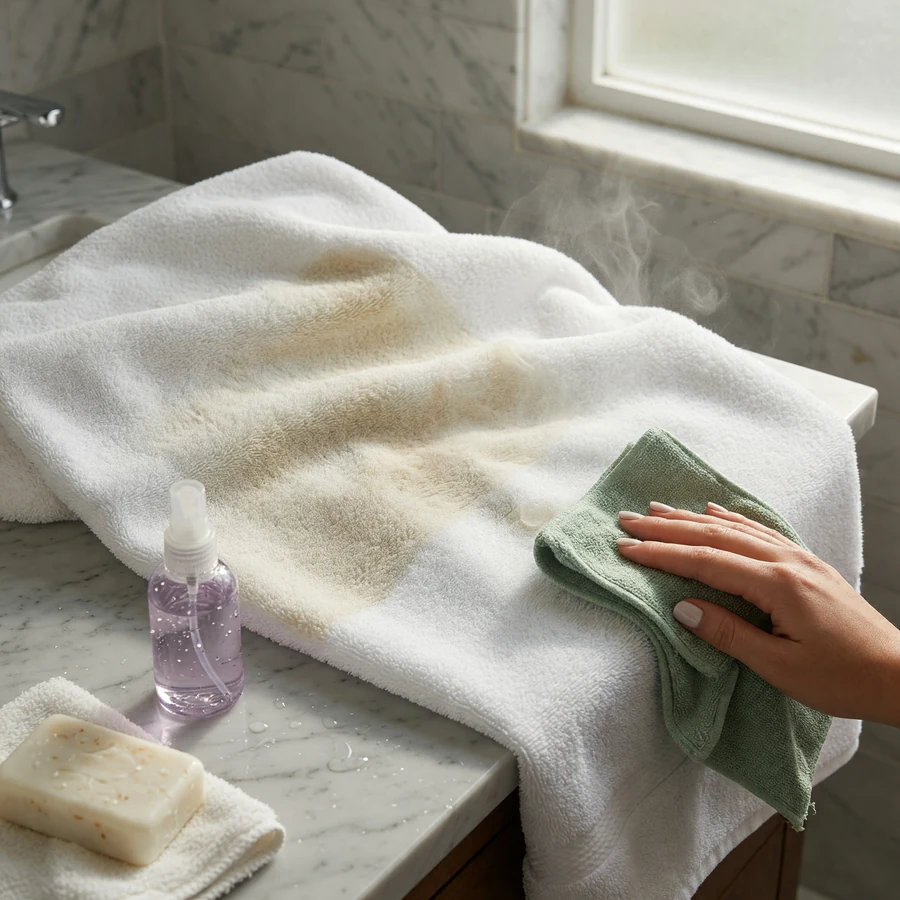
Change towels every two to three days. Wash in hot water with vinegar in the rinse cycle. Skip fabric softener. Tumble dry on medium-high heat.
Recommended Cleaning Sequence
- Start shower-head soak and toilet-bowl cleaner.
- Handle shower curtain or doors.
- Scrub grout.
- Wipe ceiling, walls, and counters.
- Finish toilet.
- Clean sink and drain.
- Rinse shower head.
- Mop floor last.
Try this exact sequence on your next clean and note how much less backtracking occurs.
Frequently Asked Questions
How often should bathrooms receive a full clean?
Once weekly works for most households. Daily two-minute habits such as squeegeeing cut deep-clean time roughly in half.
What removes hard-water stains most effectively?
White vinegar or citric acid solutions. Commercial removers are reserved for severe, long-neglected buildup.
Does bleach harm grout over time?
Repeated applications weaken grout. Seal after cleaning to extend protection.
Why does a bathroom retain odors after cleaning?
Check the drain, toilet base, and caulk lines. These areas trap organic residue that standard surface cleaning misses.
Is vinegar safe on every surface?
No. Avoid it on natural stone, cultured marble, and worn chrome finishes.
How can shower mold be prevented?
Run the exhaust fan during showers and for twenty minutes afterward. Squeegee surfaces and spread the curtain to dry.
What is the fastest way to clean a toilet?
Apply bowl cleaner first, clean exterior surfaces while it dwells, then scrub. Total time stays under four minutes.
How do you remove pink mold?
Use a bleach solution. Rinse soap residue after every use and improve airflow.
Should separate cloths be used for different areas?
Yes. Color-code cloths to avoid cross-contamination between toilet and other surfaces.
Can damaged caulk be salvaged?
Surface mildew often responds to baking-soda paste. Replace caulk once mold has penetrated beneath the surface.
For tile-specific techniques, see our guide on shower maintenance. For daily habits that reduce weekly effort, review our quick bathroom reset routine.