How to Clean the Oven: Complete Guide with Natural and Professional Methods
How to Clean the Oven: Easy Methods, Natural Products & Professional Tips
How to clean the oven starts with a simple reality check. Most guides push either baking soda paste that takes forever or chemical sprays that leave residue you can smell for days. After testing dozens of ovens in real homes, I settled on a hybrid method that mixes natural chemistry with targeted steam and scraping. It cuts active work time while skipping the ventilation headaches of heavy lye products.
The approach adjusts to how dirty things actually are. Light monthly touch-ups finish in about fifteen minutes. Heavy carbon needs an overnight paste plus steam. Matching the effort to the soil level is what makes the difference.
Why Regular Oven Cleaning Matters
A dirty oven does more than smoke up the kitchen. Thick carbon layers act like insulation, so the elements and fan run longer to hit temperature. In my experience, a neglected oven can add three to five minutes just to reach 375°F. Over months that shows up in the energy bill.
Health and safety angles matter too. Burning old grease releases acrolein and PAHs that irritate lungs. Leftover residue can also transfer off flavors to new meals. Fire risk is another factor. I once watched a small grease fire start during a long roast because splatter had sat near the element for six months.
For broader kitchen routines that support this habit, see the ultimate home cleaning guide hacks that actually work.
The Hybrid Framework for How to Clean the Oven
Pure natural methods handle fresh grease fine but stall on thick carbon. Straight chemical cleaners cut through heavy buildup fast yet create rinsing and fume issues. The hybrid uses baking soda and vinegar as the base, then adds steam and a plastic scraper for mechanical lift.
Why the Combination Beats Either Extreme
Baking soda at pH 8.3 loosens acidic deposits without harming enamel. Vinegar creates fizz that lifts the softened stuff. Most articles skip the timing detail: the reaction needs moisture and hours. When I tried scraping after only four hours, results stayed mediocre. Eight hours minimum changed everything.
Steam rehydrates the dried paste and reaches crevices the paste missed. A plastic scraper then removes bulk without scratches. Microfiber cloths trap dissolved grease instead of smearing it. These steps turned an unpredictable overnight job into something repeatable.
How to Clean the Oven in 15 Minutes for Light Buildup
Use this version every three to six weeks when residue is still soft. It prevents the need for deep cleans later.
- White vinegar diluted 50/50 in a spray bottle
- Thick baking soda paste (three tablespoons soda to one tablespoon water)
- One microfiber cloth and one damp sponge
- Plastic scraper
Step 1: Pull racks and soak them in hot soapy water.
Step 2: Spray the vinegar mix on walls, floor, and door. Wait three minutes.
Step 3: Wipe top to bottom with the microfiber.
Step 4: Apply paste to raised spots, wait two minutes, then scrape or sponge.
Step 5: Finish with a damp wipe and dry thoroughly to avoid rust on older floors.
After doing this monthly I found the job rarely exceeds fifteen minutes because buildup never hardens.
How to Clean the Oven with Heavy Carbonized Residue
For ovens ignored six months or longer, plan two to four hours of active work across two days. Patience beats force.
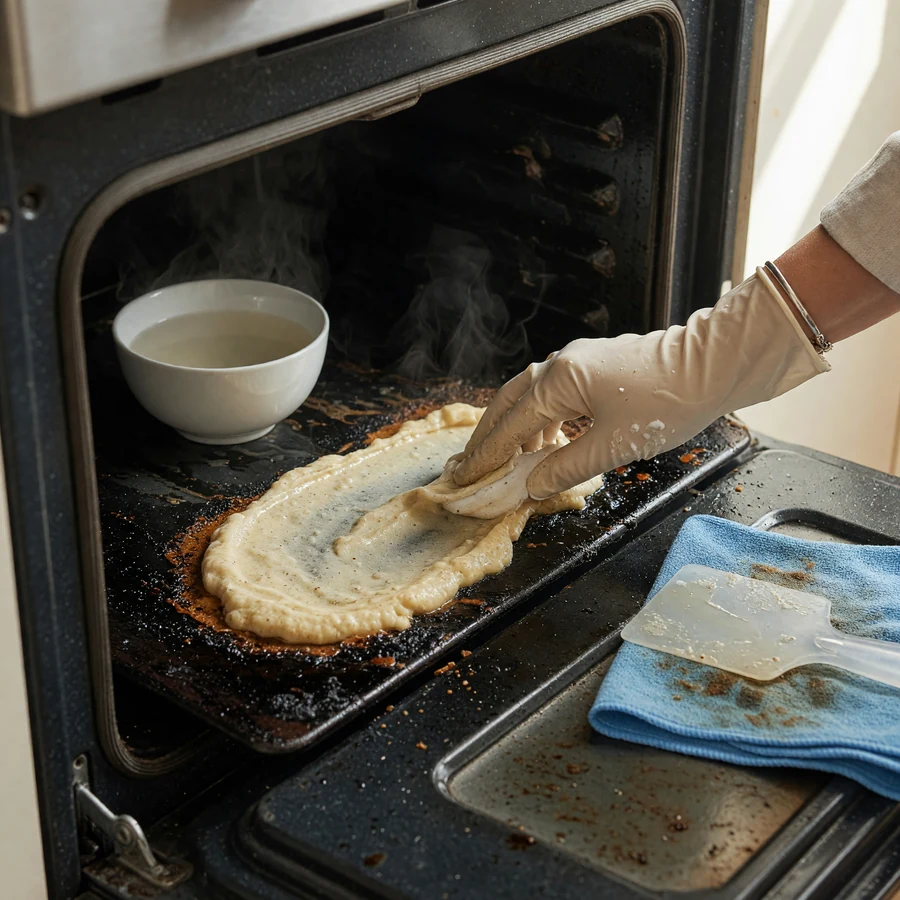
Spread a thick baking soda paste over every soiled area. Cover the black layers completely and leave it overnight. The next morning place a bowl of water in the oven at 450°F for twenty minutes to create steam. Once cool, scrape with the plastic tool in short strokes, spray vinegar to neutralize, and wipe. Hit any remaining spots with fresh paste for another four to six hours if needed.
The second scraping session always moves faster because the first soak has already broken most bonds. Two cycles have handled every severely neglected oven I’ve worked on without commercial gel.
When tackling the rest of the kitchen at the same time, the how to clean your kitchen the ultimate 2026 guide gives useful context.
Chemical Cleaners: When They Make Sense
Commercial sodium hydroxide products work by saponifying fat, which is why they finish in hours what baking soda needs overnight. The trade-off is real respiratory and skin risk. I reserve them for once or twice a year on the worst cases and always follow strict ventilation, nitrile gloves, and full dwell time.
Fume-free versions using monoethanolamine are gentler on lungs but slower. For regular maintenance the natural route stays safer and leaves no residue concern on food surfaces.
Common Mistakes I Still See
Rushing the overnight soak is the biggest error. Shortening it to four hours forces extra scrubbing later. Using metal scrapers on enamel creates permanent scratches that trap more grease. Skipping rack removal wastes time and leaves hidden corners untouched. Overusing chemicals on light soil adds unnecessary exposure for minimal gain.
The limitation I ran into early was trying steam alone on gas ovens; it can affect the igniter if water pools, so I always wipe that area dry first.
Frequently Asked Questions
How often should I clean the oven?
Monthly fifteen-minute maintenance prevents deep cleans. Heavy users may need the full hybrid protocol every two to three months.
Can I use the steam method without an overnight paste?
Steam alone softens fresh grease but does little against thick carbon. The paste first creates the chemical loosening that steam then amplifies.
Is it safe to clean the oven with baking soda on self-cleaning models?
Yes, but avoid the self-clean cycle itself on heavily soiled units. It can bake residue into the enamel and create smoke. The hybrid method works safely on these ovens.
What if vinegar and baking soda leave white spots?
Those are dried residue. A final vinegar spray followed by a damp microfiber wipe removes them completely.
Does oven type affect the method?
Glass and enamel interiors respond well to the hybrid approach. Avoid abrasives on any coated surface. Convection fans should be wiped carefully to prevent grease redistribution.
When I tested this myself on a ten-year-old convection model, the hybrid cut scrubbing time by half compared with paste alone.